Keynote Speakers
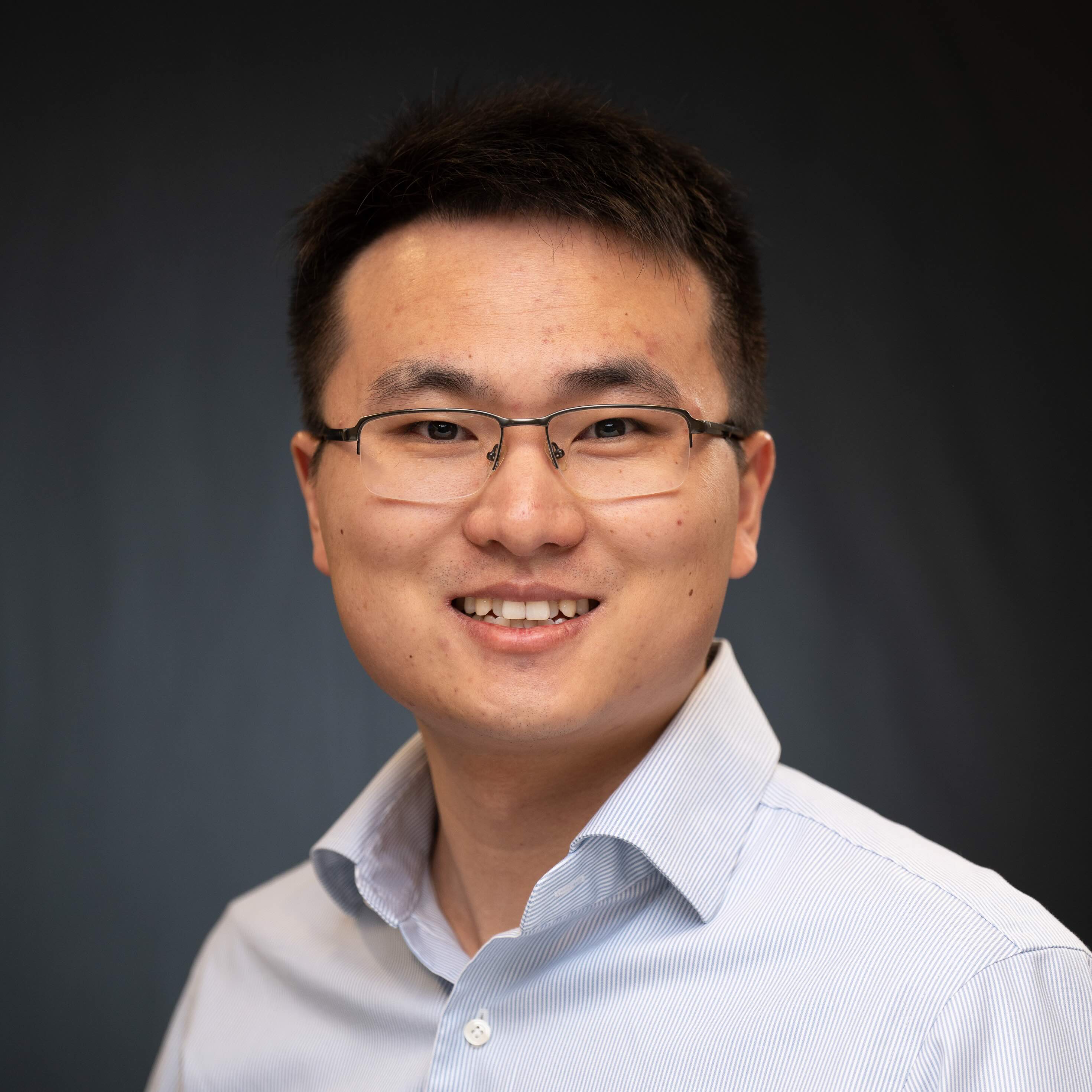
Wenguo Yang (University of Chinese Academy of Sciences, China)
Title: Non-submodular Function Maximization and Its Applications
Abstract: In this talk, we present a systematic overview of non-submodular function maximization and its diverse applications. The discussion is organized around two technical paradigms: parameterized non-submodular maximization and structured non-submodular maximization. For parameterized non-submodular maximization, we introduce optimization methods and theoretical results, along with several metrics for quantifying the degree of sub-modularity. For structured non-submodular maximization, we focus on four special forms: the difference of submodular functions (submodular difference), the ratio of submodular functions (submodular ratio), the sum of a submodular function and a super-modular function, and the network structure of non-submodular functions. Finally, we address non-submodular influence maximization problems, including classical influence maximization and profit maximization models, highlighting their practical relevance and computational challenges.
Bio: Wenguo Yang is a Professor and Doctoral Supervisor at the University of Chinese Academy of Sciences (UCAS), and Director of the UCAS Training Office. He obtained his Doctor's degree in Operations Research and Cybernetics from the University of Chinese Academy of Sciences in 2006. From 2006 to 2008, he pursued postdoctoral research at the Institute of Policy and Management, Chinese Academy of Sciences. He was a visiting scholar at the University of Texas at Dallas from 2016 to 2017. He holds academic positions in multiple academic organizations, including the Chinese Mathematical Society (CMS), the China Society for Industrial and Applied Mathematics (CSIAM), and the Mathematical Programming Society of the Operations Research Society of China (ORSC-MPS). His main research areas include Submodular Optimization, Social Network Algorithm Design, and Robust Optimization. In recent years, he has published more than 120 academic papers. He has presided over and participated in 20 projects, including key projects of the Ministry of Science and Technology, major projects and general projects of the National Natural Science Foundation of China. In October 2016, he won the Operations Research Application Award of the Science and Technology Award of the Operations Research Society of China.
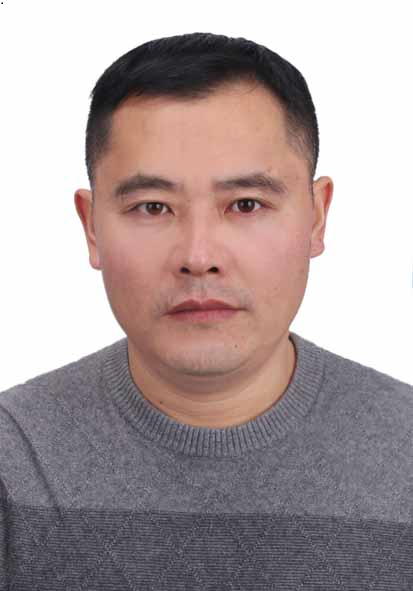
Shaojie Tang (University at Buffalo, USA)
Bio: Dr. Shaojie Tang is Professor and Chair of the Department of Management Science and Systems at the University at Buffalo School of Management, Director of the Center for Business AI Innovation, and Associate Director of the Institute for Artificial Intelligence and Data Science. His research focuses on machine learning, optimization, and information systems, and he has published in leading journals and conferences, including Information Systems Research, Mathematical Programming, ICML, The Web Conference (WWW), NeurIPS, AAAI, COLT, KDD, and UAI. He has served as an Area Chair for NeurIPS and as a Senior Editor for Production and Operations Management.
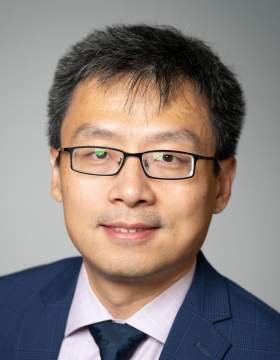
Xiao Li (Santa Clara University, USA)
Title: Utilizing Distributed Intelligence at the Edge in the AI Era
Abstract: The rapid growth of artificial intelligence highlights the limitations of centralized cloud architectures. This presentation explores the vital shift toward distributed intelligence at the network edge to address pressing challenges in data privacy, scalability, and resource heterogeneity. This talk will discuss recent advancements in Federated Learning (FL) in edge computing, including general reinforcement learning (RL) optimization strategies, clustered architectures, and collaborative aggregation techniques that improve training efficiency across diverse edge devices. The discussion will then extend these concepts to a more challenging multi-job setting. Finally, the presentation will introduce a research application of leveraging multiple distributed intelligent agents for smart power grid optimization.
Bio: Dr. Xiao Li is an Assistant Professor in the Department of Computer Science and Engineering at Santa Clara University and the Director of the Distributed Data Management and Mining Laboratory (D2M2 Lab). He earned his Ph.D. in Computer Science from the University of Texas at Dallas. His research focuses on the intersection of distributed computing and artificial intelligence, with a specialization in blockchain technologies, federated learning, and edge computing. Dr. Li’s work has been widely published in premier refereed journals and conferences, including IEEE TCSS and IEEE ICDCS. He was awarded the prestigious Jan Van der Ziel Fellowship at UTD and serves as an editor for the DMAA journal.